________________________________________________________________________________________
Ford 1720 Tractor Troubleshooting
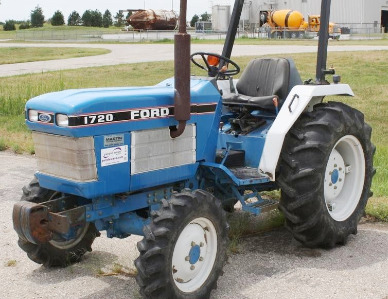 The
Ford 1720 is a Twenty series compact utility tractor. This model was
manufactured by Shibaura built from 1987 to 2000. The Ford 1720 tractor is
powered by 91.3 cubic inches (1.5 L) Shibaura N843 4-stroke three-cylinder
indirect injection water-cooled diesel engine with a maximum power of 27.7 Hp
(20.7 kW) at 2500 rev/min. The Ford 1720 is fitted with two types of
transmission.
The
Ford 1720 is a Twenty series compact utility tractor. This model was
manufactured by Shibaura built from 1987 to 2000. The Ford 1720 tractor is
powered by 91.3 cubic inches (1.5 L) Shibaura N843 4-stroke three-cylinder
indirect injection water-cooled diesel engine with a maximum power of 27.7 Hp
(20.7 kW) at 2500 rev/min. The Ford 1720 is fitted with two types of
transmission.
1st type: 12x4 unsynchronized gear transmission. 2nd type: mechanical
shuttle transmission with 12 forward and 12 reverse gears. Max. forward
speed - 13.4 mph (21.6 kph), maximum reverse speed - 9.2 mph (14.8 kph).
The open center hydraulic system includes a gear pump with fluid flow
rate of 7.8 gpm (29.5 lpm). The hydraulic pressure is 2130 psi (147
bar). The 4-wheel drive models are equipped with 7.00x14 or 25x8.5-14
front tires and 11.2x24 or 13.6-16 rear tires. The 5.00x15 or 23x8.5-12
front tires and 11.2x24 or 13.6-16 rear tires are used for tractors with
2-wheel drive. The wheelbase is 65 in (1650 mm). The Ford 1720 is
compatible with a 78" front-mount blade, 63" front-mount snowblower,
Ford 7108 front end loader with lift capacity to full height of 900 lbs
(408 kg), and Ford 757B backhoe.
| Engine Troubleshooting |
| Diesel won't start or hard to start |
| Dirty fuel filter element - Clean the filter or install new filter element |
| Closed fuel cock - Open fuel on-off cock to inject fuel |
| Fuel-line is leaking air - Retighten clamps, replace defective pipes |
| Clogged fuel injectors - Test fuel injectors and change if necessary |
| Fuel injection pump is not working correctly - Replace or rebuild injection pump |
| Low engine compression - Check cylinder block and replace worn parts |
| Diesel stalls while running |
| Low coolant temperature - Warm up engine as required |
| Water, dirt, or air in fuel system - Drain, flush, fill, and bleed system |
| Improper fuel injection - Fuel injection settings required |
| Plugged fuel filter - Clean the filter element |
| Fuel injectors are defective or dirty - Service or change fuel injectors |
| Engine starts but immediately shuts off |
| Incorrect setting of fuel injection pump timing - Correct injection timing |
| Plugged fuel filter - Change filter element |
| Fuel injector nozzles are damaged or dirty - Inspect injector nozzles and change if required |
| Fuel injection pump malfunction - Repair or install new pump |
| Air cleaner element is clogged - Change or service air cleaner element |
| Incorrectly set low idle speed - Need to adjust idle speed |
| Fuel injection pump failure - Replace injection pump or repair it |
| Fuel injector nozzles are defective or dirty - Change or clean injector nozzles |
| Valve out of adjustment - Adjust valve clearance |
| Insufficient coolant - Fill the cooling system. Any leaks must be repaired |
| Cooling system is clogged or cooling parts are worn - Change faulty components or service cooling system |
| Engine oil insufficient - Checking oil level and add if necessary |
| Unadjusted fan belt tension or worn belt - Adjust belt tension properly or change it |
| Defective thermostat - Thermostat needs to be replaced |
| Dirty or faulty injectors - Service or change fuel injectors |
| Incorrect fuel injection pressure - Test fuel injection pressure and adjust it correctly |
| Air filter element is clogged - Service or change air filter |
| Dirty oil filter - Replace or clean engine oil filter element |
| Engine is under excessive load - Reduce load or shift to lower gear |
| The valve clearance is incorrect - Adjust valve clearance |
| Incorrect low idle setting - Adjust low idle speed |
| Clogged fuel hoses or pipes - Fuel pipes and hoses need to be cleaned |
| Poor engine compression: Leaking or broken valves - Replace the valves as required |
| Incorrectly set fuel injection pump timing - Check and correct settings |
| Fuel injector nozzles are faulty - Replace fuel injector nozzles |
| Insufficient engine oil - Check oil level and add oil as required |
| Engine is cold - Warm up engine to required temperature |
| Main bearings or crankshaft are worn out - Change or repair worn components |
| Piston rings are damaged or broken - Have piston rings replaced |
| Flywheel mounting screws are loose - Tighten the screws |
| Excessive oil consumption |
| Oil leaking: Damaged gaskets or seals - Change worn parts according to specifications |
| Improper oil viscosity - Use oil of correct viscosity |
| Piston rings are stuck or worn - Install new piston rings |
| Worn valve stems and valve guides - Valves replacement required |
| Worn pistons or cylinder liners - Inspect liners and pistons, fit new parts as necessary |
| Electrical System Troubleshooting |
| Battery is not charging |
| Battery is defective - Install a new battery |
| Damaged battery wiring harness - Inspect wiring for damage, replace or repair |
| Corroded or loose battery terminals and cables - Tighten or clean cables and terminals |
| Damaged belt or incorrectly adjusted belt tension - Replace belt or correctly adjust belt tension |
| Battery voltage is low - Battery needs to be recharged |
| Battery will not hold charge - Battery needs to be serviced or replaced |
| Battery wiring harness failure - Inspect electrical cables for defects, repair or replace |
| Corroded or loose terminals and cables - Tighten or service terminals and cables |
| Low battery output voltage - Charge the battery |
| Discharged or defective battery - Change or recharge battery |
| Damaged starter motor - Starter should be changed |
| Wiring is improperly connected or disconnected - Need to reconnect the wiring properly |
| Transmission Troubleshooting |
| Difficulty shifting gears |
| Clutch is not adjusted or faulty - Change or adjust clutch |
| Gear shift linkage is stuck or damaged - Change defective shift linkage |
| Shift forks are damaged or worn - Install new shift forks |
| Gearshift mechanism failure - Change or repair failed components |
| Transmission oil pressure is low |
| Insufficient oil supply - Check transmission oil level and add oil as required |
| Dirty transmission oil filter (if fitted) - Replace or service transmission oil filter |
| Relief valve sticking - Install a new relief valve |
| Bearings are worn or damaged - Bearings replacement required |
| Fluid level is low - Check transmission fluid level and add it as required |
| Transmission oil contamination - Fill up with fresh transmission oil |
| Worn gears or improper backlash - Replace gears or set backlash correctly |
| Worn or damaged shift forks - Change the shift forks |
| Broken gaskets or seals - Install new components |
| Transmission housing is cracked - Replace housing or transmission assembly |
| Hydraulics Troubleshooting |
| Hydraulic system is too hot |
| Improper hydraulic pressure adjustments - Adjust it correctly |
| Main relief valve is faulty or misadjusted - Adjust relief valve or change if required |
| Dirty hydraulic fluid - The fluid must be changed |
| Air leaks in hydraulic system - Check the pump seals, suction pipe, and fittings |
| Hydraulic fluid pressure is insufficient |
| Lack of hydraulic fluid - Need to add fluid |
| Hydraulic fluid filter element clogging - Clean or change hydraulic filter |
| Defective hydraulic pump - Check pump performance and change it if necessary |
| Defective or not adjusted hydraulic spool valve - Adjust correctly or change |
| Hydraulic cylinder is defective - Inspect cylinder parts for wear or damage and replace if required |
| Leakage in hydraulic lines - Find leaks in hydraulic system and repair it |
| Hitch cannot be lifted or lifting is too slow |
| Lack of hydraulic oil - Fill up the hydraulic oil |
| Cold fluid in hydraulic system - Wait for fluid to warm up |
| Hydraulic oil filter clogging - Hydraulic filter maintenance required |
| Hydraulic pump failure - Check the pump capacity and replace pump if required |
| Faulty or incorrectly adjusted main relief valve - Adjust the valve or replace if necessary |
| Hydraulic control valve block is defective or set improper - Adjust correctly or change |
| Hydraulic cylinder is faulty - Inspect cylinder parts for wear or damage and replace if required |
| Damaged or disconnected suction pipe - Connect or replace |
| 3-point hitch drops slowly or won't drop |
| Defective or not adjusted hydraulic control valve - Replace or adjust correctly |
| Hydraulic cylinder malfunction - Inspect the hydraulic cylinder components for damage or wear and change if required |
| Hitch rock shaft is damaged - Change the shaft |
| The hitch has mechanical faults - Replace worn or faulty hitch components |
| Hitch jerks when lift or lower |
| Hydraulic system sucks air - Inspect the pump seals, suction pipe, and fittings |
| Contaminated hydraulic oil - Change hydraulic oil |
| Hydraulic pump not working - Check pump flow and change pump if necessary |
| Hydraulic spool valve block is defective or set improper - Adjust properly or replace |
| Hydraulic cylinder is defective - Inspect the hydraulic cylinder parts for damage or wear and replace if required |
| Steering System Troubleshooting |
| Stiff steering |
| Damaged or improperly installed steering column - Reinstall or replace the steering column |
| Air trapped in the steering system - Bleed the system of air |
| Improper toe-in adjustment - Adjust toe-in wheels properly |
| Tires are not properly inflated - Inflate tires as required |
| Steering pump failure - Repair or replace steering pump |
| Defective or worn power steering control unit - Inspect and replace as required |
| Relief valve is seized or worn - Inspect relief valve and replace if necessary |
| Steering oil insufficient - Check and refill steering oil |
| Steering system oil leak - Tighten the steering pipe and hose joints |
| Steering wheel has too much free-play |
| Worn steering column coupling or shaft - Replace faulty part |
| Power steering control unit is worn or defective - Check and replace as required |
| Steering pump failure - Check the hydraulic steering pump and change if necessary |
| Worn or faulty steering linkage or tie-rod ends - Replace damaged component |
| Tractor pulls to right or left |
| Tires are deflated - Need to inflate tires |
| Incorrect toe-in adjustment - Adjust toe-in properly |
| Faulty or worn steering tie-rod ends or linkage - Change damaged component |
| Worn or defective power steering control unit - Replace or repair steering unit as required |
| Steering cylinder is damaged - Change or repair steering cylinder |
| Defective or improperly adjusted front hub bearings - Change or adjust the bearings properly |
________________________________________________________________________________________
________________________________________________________________________________________
________________________________________________________________________________________
| Farm Tractors Technical Specifications |